

Showing posts with label Earth. Show all posts
Showing posts with label Earth. Show all posts
Thursday, October 1, 2015

Thursday, September 17, 2015

Thursday, September 10, 2015
Ruby B. Johnson crowned Miss Eco Sierra Leone 2016
On August 30, 2015 His Excellency Hon. Bockarie Stevens, Sierra Leone’s Ambassador to the U.S., crowned Miss Earth Maryland 2015 Ruby B. Johnson as Miss Eco Sierra Leone. Ruby will serve as Sierra Leone’s official delegate at the prestigious 2016 Miss ECO Pageant in Egypt.
Ruby accepted her new title to the applause of a select group of influential leaders within the Sierra Leonean Diaspora community gathered at the Embassy of Sierra Leone that included: Dr. Fuambai Sia Ahmadu, Founder and Owner of the Miss Sierra Leone USA Pageant; Mr. David Vandy of Voice of America; Mr. Daniel Koroma of the Montgomery County Executive Office and Ms. Ramzhain Suma, former Miss Sierra Leone Heritage.
As Miss ECO Sierra Leone, Ruby will promote ecotourism, green economy, and environmental awareness. She will devote her year advocating about environmental issues in Sierra Leone and worldwide.
Read more at Critique Echo Newspaper

Wednesday, July 1, 2015
My Green Maryland - What is Ecofeminism?
Gree(n)tings everyone!!!
 |
| Miss Earth Maryland 2015 Ruby B. Johnson |
Ecofeminism embraces the idea that the oppression of women and the oppression or destruction of nature are closely connected. Elements of the feminist movement, the peace movement and the environmentalist and green movements can be seen in ecofeminism. The term was coined in 1974 from the French feminist Francoise d'Eaubonne's work, "Le féminisme ou la mort." Ecofeminists address issues like water pollution, deforestation, toxic waste dumping, agricultural development and sustainability, animal rights and nuclear weapons policies. Feminism can be defined as the thought and movement toward the political, economic and social equality of women and men. Ecology is the study of the relationship between human groups and their physical and social environments.
Some people credit the German zoologist Ernst Haeckel as the founder of the science of ecology. Others believe that the real founder of ecology was a woman -- Ellen Swallow. A renowned industrial and environmental chemist, Swallow was the first female student admitted to the Massachusetts Institute of Technology (MIT) and the institution's first female instructor. As a teacher and active ecologist, Swallow concerned herself with educating women about the environment in relation to their homes or homemaking while focusing on monitoring the quality of their water, air and nutrition.
In ecofeminist literature, ecofeminism is often described as the belief that environmentalism and feminism are intrinsically connected. Another definition suggests that discrimination and oppression based on gender, race and class are directly related to the exploitation and destruction of the environment.
The Green Belt (Kenya), Chipko Movements (Himalayas and Northern India), and Love Canal (United States) all have one thing in common -- the leadership and activism of strong and persistent women. The study of ecofeminism started informally at conferences in the U.S., U.K. and Germany and though grassroots efforts in India and Africa. Today, courses and programs on ecofeminism are taught at universities and colleges worldwide.
Ruby B. Johnson,
 |
| Woman + Nature = Ecofeminism |
In ecofeminist literature, ecofeminism is often described as the belief that environmentalism and feminism are intrinsically connected. Another definition suggests that discrimination and oppression based on gender, race and class are directly related to the exploitation and destruction of the environment.
 |
| Rachel Carson American Biologist and Conservationist |
Throughout many cultures, women have historically held the role of primary food, fuel and water gatherer for their families and communities. Because of this, they have also had a major interest in trying to prevent or undo the effects of deforestation, desertification and water pollution. The ecofeminist movement quickly gained momentum in the U.S. Ynestra King and activist Grace Paley were among the women who organized the "Women and Life on Earth" conference at the University of Massachusetts at Amherst in 1980. After the success of a conference at Sonoma State University the following year, a group of eight women formed the first national ecofeminist organization, WomanEarth.
 |
| Dr. Wangari Muta Maathai Ecofeminist, 2004 Nobel Laureate, and The Green Belt Movement Founder |
Ruby B. Johnson,
Your Miss Earth Maryland 2015
Continuing the legacy of beauty and responsibility

Credit:
Monday, June 8, 2015
Miss Earth Maryland Celebrates World Oceans Day 2015
Gree(n)tings everyone!!!
I hope you and yours are doing well. I've been busy but blessed, all thanks to the Almighty. Today, June 8, is World Oceans Day. The theme for this year is "Healthy Oceans, Healthy Planet." WOD is the United Nations-recognized day of ocean celebration and action, to support action to protect the ocean.
[3] Make Less Waste
You will decrease marine litter and protect coral reefs. Buy items with less packaging. Stop using disposable containers. Buy milk in recyclable cartons, not in plastic bags. Pack litter-free lunches. Use cloth bags or metal containers.
[5] Reduce Your Carbon Footprint.
You will limit dead zones and protect coral reefs.
I hope you and yours are doing well. I've been busy but blessed, all thanks to the Almighty. Today, June 8, is World Oceans Day. The theme for this year is "Healthy Oceans, Healthy Planet." WOD is the United Nations-recognized day of ocean celebration and action, to support action to protect the ocean.
 |
| Miss Earth Maryland 2015 Ruby B. Johnson |
We are all linked to the ocean. Even if you live inland, your actions and behaviors can impact the oceans and its resources. Trash and pollutants are carried out to sea from land via rivers, streams, and the wind. Both inlanders and coastal residents can make small changes in their everyday lives to help conserve the ocean. One simple change is to avoid using disposable plastic bags. More than 8 million tons of plastic trash, including millions of disposable plastic bags, litter the ocean every year. Packaging store purchases in reusable bags will reduce trash in our oceans and help save the lives of sea turtles, whales, dolphins, seabirds, and other wildlife who call the ocean their home.
 |
| Miss Earth Maryland 2015 Ruby B. Johnson |
Five Ways To Protect Our Oceans
[1] Eat Sustainably-Caught Seafood
By doing this, you will protect the health of the fish populations and protect coral reefs. Use the Ocean Wise Guide before you shop with your family.
[2] Grow/Buy Organic
You will protect coral reefs and limit dead zones. This farming/gardening method doesn’t use chemicals or dangerous fertilizers. Plant an organic garden. Buy and eat organic food. Check for organic certification labels and the PLU number that starts with “9.”[3] Make Less Waste
[4] Stop Using Plastic
You will decrease marine litter. Replace the plastic things in your life with other materials like glass, wood, or metal. Use biodegradable plastics made from plants (corn). Recycle ALL plastic. Properly sort all garbage and recycling. Have plastic-free picnics![5] Reduce Your Carbon Footprint.
[BONUS] Use Organic Sunscreen
Additionally, use sunscreen with safe ingredients. You will protect coral reefs. It’s better for your body AND the ocean! |
| Miss Earth Maryland 2015 Ruby B. Johnson |
Ruby B. Johnson,
Your Miss Earth Maryland 2015
Continuing the legacy of beauty and responsibility

Thursday, June 4, 2015
Miss Earth Maryland Celebrates World Environment Day 2015
Gree(n)tings everyone!!!
I hope you and yours are doing well. I'm doing great, all thanks to the Almighty. Today, June 5th, is a very special day because it is World Environment Day! This year's theme is "Seven Billion Dreams. One Planet. Consume with Care." WED is the opportunity for everyone to realize the responsibility to care for the Earth and to become agents of change.
Fact: World Environment Day (WED) is the United Nations’ principal vehicle for encouraging worldwide awareness and action for the environment. Over the years it has grown to be a broad, global platform for public outreach that is widely celebrated by stakeholders in over 100 countries. It also serves as the ‘people’s day’ for doing something positive for the environment, galvanizing individual actions into a collective power that generates an exponential positive impact on the planet.


Ruby B. Johnson,
I hope you and yours are doing well. I'm doing great, all thanks to the Almighty. Today, June 5th, is a very special day because it is World Environment Day! This year's theme is "Seven Billion Dreams. One Planet. Consume with Care." WED is the opportunity for everyone to realize the responsibility to care for the Earth and to become agents of change.
 |
| Miss Earth Maryland 2015 Ruby B. Johnson Photo by ROS Productions |

Purpose of 2015 Theme: Living within planetary boundaries is the most promising strategy for ensuring a healthy future. Human prosperity need not cost the earth. Living sustainably is about doing more and better with less. It is about knowing that rising rates of natural resource use and the environmental impacts that occur are not a necessary by-product of economic growth.

EVERY DAY IS WORLD ENVIRONMENT DAY!
Ruby B. Johnson,
Your Miss Earth Maryland 2015
Continuing the legacy of beauty and responsibility
Thursday, May 21, 2015
Miss Earth Maryland Presents... Earth Month 2015 (Week 4)
Gree(n)tings everyone!!!
I hope you and yours are doing well. I am doing great, thanks be to God! As some of you may know, April commemorates Earth Month! If you are connected with me on Facebook, you will have noticed that every day last month, I posted interesting tidbits about planet Earth in my Thank You, Mother Earth series. Below is a summary of Earth Month 2015, the final week:


Day 24: Silver

Day 25: Sodium Carbonate

Day 26: Tantalum

Day 27: Tungsten
Day 28: Clay

Day 30: Environmentalism
Environmentalism is a broad philosophy, ideology and social movement regarding concerns for environmental protection and improvement of the health of the environment, particularly as the measure for this health seeks to incorporate the concerns of non-human elements. Environmentalism advocates the lawful preservation, restoration and/or improvement of the natural environment, and may be referred to as a movement to protect plant and animal diversity. For this reason, concepts such as a land ethic, environmental ethics, biodiversity, ecology and the biophilia hypothesis figure predominantly. At its crux, environmentalism is an attempt to balance relations between humans and the various natural systems on which they depend in such a way that all the components are accorded a proper degree of sustainability.
Ruby B. Johnson,
I hope you and yours are doing well. I am doing great, thanks be to God! As some of you may know, April commemorates Earth Month! If you are connected with me on Facebook, you will have noticed that every day last month, I posted interesting tidbits about planet Earth in my Thank You, Mother Earth series. Below is a summary of Earth Month 2015, the final week:
Day 22: Molybdenum

The name (Molybdenum) is from Neo-Latin molybdaenum, from Ancient Greek molybdos, meaning lead, since its ores were confused with lead ores. Used in alloy steels to make automotive parts, construction equipment, gas transmission pipes; stainless steels; tool steels; cast irons; super alloys; and chemicals and lubricants. As a pure metal, molybdenum is used because of its high melting temperatures (4,730 F) as filament supports in light bulbs, metalworking dies and furnace parts. Major producers are the United States, Chile, China, and Peru.
Day 23: Zeolite

Zeolites are microporous, aluminosilicate minerals commonly used as commercial adsorbents and catalysts. Natural zeolites form where volcanic rocks and ash layers react with alkaline groundwater. Zeolites also crystallize in post-depositional environments over periods ranging from thousands to millions of years in shallow marine basins. Zeolites are used in animal feed, cat litter, cement, aquaculture (fish hatcheries for removing ammonia from the water); water softener and purification; in catalysts; odor control; and for removing radioactive ions from nuclear plant effluent.
Day 24: Silver

Silver is used in coins and medals, electrical and electronic devices, industrial applications, jewelry, silverware and photography. The physical properties of silver include ductility, electronics conductivity, malleability and reflectivity. Used in lining vats and other equipment for chemical reaction vessels, water distillation, etc.; a catalyst in manufacture of ethylene; mirrors; silver plating; table cutlery; dental, medical and scientific equipment; bearing metal; magnet windings; brazing alloys, solder. Also used in catalytic converters, cell phone covers, electronics, circuit boards, bandages for wound care and batteries. Silver is produced in the U.S. at over 30 base and precious metal mines primarily in Alaska and Nevada. The leading global producers include Mexico, China, Peru, Chile, Australia, Bolivia and the U.S. The U.S. was 57% reliant in 2012.

Sodium carbonate (soda ash or trona) is used in glass container manufacture; in fiberglass and specialty glass; also used in production of flat glass; in liquid detergents; in medicine; as a food additive; photography; cleaning and boiler compounds; pH control of water. Most U.S. production comes from Wyoming. The U.S. is a major producer. Trona, is mined in several areas of the US and provides nearly all the domestic consumption of sodium carbonate. Large natural deposits found in 1938, such as the one near Green River, Wyoming, have made mining more economical than industrial production in North America.

There are many species of tantalum minerals, only some of which are so far being used by industry as raw materials: tantalite, microlite, wodginite, euxenite, polycrase. Tantalite is the most important mineral for tantalum extraction. Tantalite has the same mineral structure as columbite; when there is more tantalum than niobium it is called tantalite and when there is more niobium than tantalum is it called columbite (or niobite). Tantalum is a a refractory metal with unique electrical, chemical and physical properties used to produce electronic components, tantalum capacitors (in auto electronics, pagers, personal computers and portable telephones) ; for high-purity tantalum metals in products ranging from weapon systems to superconductors; high-speed tools; catalyst; sutures and body implants; electronic circuitry; thin-film components. Used in optical glass and electroplating devices.
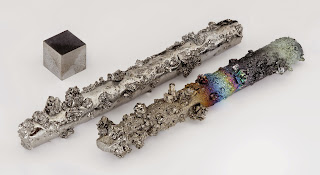
Day 27: Tungsten

More than half of the tungsten (also known as Wolfram) consumed in the United States is used in cemented carbide parts for cutting and wear-resistant materials, primarily in the construction, metalworking, mining, and oil- and gas-drilling industries. The remaining tungsten is consumed to make tungsten heavy alloys for applications requiring high density; electrodes, filaments, wires, and other components for electrical, electronic, heating, lighting, and welding applications; steels, superalloys, and wear-resistant alloys; and chemicals for various applications.

A clay pit is a quarry or mine for the extraction of clay, which is generally used for manufacturing pottery, bricks or Portland cement. Clay is used in floor and wall tile as an absorbent, in sanitation, mud drilling, foundry sand bond, iron pelletizing, and light weight aggregate. It is produced in 40 states. Ball clay is used in floor and wall tile. Bentonite is used for drilling mud, pet waste absorbent, iron ore pelletizing and foundry sand bond. Kaolin is used for paper coating and filling, refractory products, fiberglass, paint, rubber and catalyst manufacture. Common clay is used in brick, light aggregate and cement.
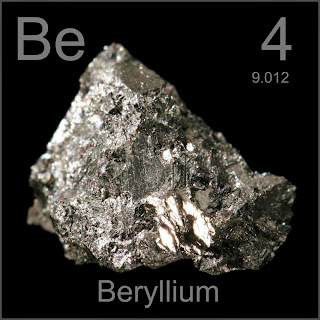
Day 29: Beryllium

Beryllium is used in the nuclear industry and to make light, very strong alloys used in the aircraft industry. Beryllium salts are used in fluorescent lamps, in X-ray tubes and as a deoxidizer in bronze metallurgy. Beryl is the gem stones emerald and aquamarine. It is used in computers, telecommunication products, aerospace and defense applications, appliances and automotive and consumer electronics. Also used in medical equipment. The U.S. was 10 percent import reliant in 2012.
Day 30: Environmentalism
 |
| Woman of the Earth Miss Earth Maryland 2015 Ruby B. Johnson |
Ruby B. Johnson,
Your Miss Earth Maryland 2015
Continuing the legacy of beauty and responsibility
Help me compete at Miss Earth United States 2015. DONATE HERE
 |
| Ruby B. Johnson Seeking Sponsors for Miss Earth United States 2015 |
Thursday, April 23, 2015
Miss Earth Maryland Presents...Earth Month 2015 (Week 3)
Gree(n)tings everyone!!!
I hope you and yours are doing well. I am doing great, thanks be to God! As some of you may know, April commemorates Earth Month! If you are connected with me on Facebook, you will have noticed that every day in the month so far, I've posted interesting tidbits about planet Earth in my Thank You, Mother Earth series. Below is a summary of Earth Month 2015, Week 3:

Day 16: Potash

Day 17: Bauxite

Day 18: Platinum

Day 19: Boron


Day 21: Halite
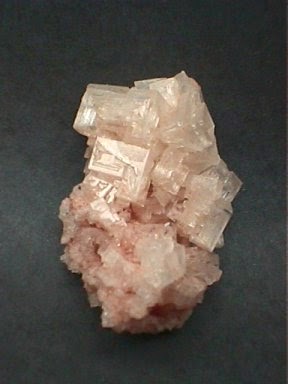 Halite, the natural form of salt, is a mineral found in solid masses, and as a dissolved solution in the oceans and in salt lakes. The inland lakes that are rich in salt exist in arid regions, and may also be below sea level without an outlet. Many of these inland lakes have already dried up, leaving over enormous salt deposits which may be commercially mined. Halite also exists in non-arid regions, in underground deposits which can reach great depths. Underground Halite deposits are often mined by drilling wells into the salt layer, and bringing in hot water which quickly dissolves the salt into a brine. The brine is saturated with dissolved salt and is then pumped out. The brine evaporates and the remainder salt crystallizes and is harvested. In some underground salt deposits such as Texas and Louisiana, salt is pushed upwards by an underground force through soft ground and forms arched structures known as salt domes. These deposits are also important sources of salt mining operations and are very unique geological formations. Halite can be used for food, and deicing snow roads during winter season.
Ruby B. Johnson,
I hope you and yours are doing well. I am doing great, thanks be to God! As some of you may know, April commemorates Earth Month! If you are connected with me on Facebook, you will have noticed that every day in the month so far, I've posted interesting tidbits about planet Earth in my Thank You, Mother Earth series. Below is a summary of Earth Month 2015, Week 3:
Day 15: Granite
Granite is a felsic intrusive igneous rock and has been used as a building material for many centuries. The granite mineral composition is composed primarily of quartz, mica and feldspar as well as other minerals. Granites can be predominantly white, pink, or gray in color, depending on their mineralogy. Granite is blasted from quarries in large blocks and then sliced like a loaf of bread to create bundles. The granite slabs in that bundle will match and mimic each other in directionality and color variation. Most slabs are rarely longer than 10 feet long. Granite has tiny pits or spaces between the various mineral crystals. This is caused primarily by Biotite. The extrusive igneous rock equivalent of granite is rhyolite.
Potash is any of various mined and manufactured salts that contain potassium in water-soluble form. The name derives from "pot ash", which refers to plant ashes soaked in water in a pot, the primary means of manufacturing the product before the industrial era. The word "potassium" is derived from potash. Today, potash is produced worldwide at amounts exceeding 30 million tonnes per year, mostly for use in fertilizers. Various types of fertilizer-potash thus constitute the single largest global industrial use of the element potassium. Potassium was first derived by electrolysis of caustic potash (potassium hydroxide), in 1808.
Bauxite, an aluminium ore, is the world's main source of aluminium. It consists mostly of the minerals gibbsite, boehmite and diaspore, mixed with the two iron oxides goethite and haematite, the clay mineral kaolinite and small amounts of anatase. Lateritic bauxites (silicate bauxites) are distinguished from karst bauxite ores (carbonate bauxites). The carbonate bauxites occur predominantly in Europe and Jamaica above carbonate rocks (limestone and dolomite); lateritic bauxites are found mostly in the countries of the tropics. Bauxite is usually strip mined because it is almost always found near the surface of the terrain, with little or no overburden. Bauxite rocks are typically classified according to their intended commercial application: metallurgical, abrasive, cement, chemical, and refractory. Increased aluminium recycling, which has the advantage of lowering the cost in electric power in producing aluminium, will considerably extend the world's bauxite reserves.
Platinum is a soft, dense, ductile metal that is very resistant to corrosion. It is used to make jewelry, wire, electrical contacts and laboratory vessels. Platinum expands at nearly the same rate as soda-lime-silica glass, so it is used to make sealed electrodes in glass systems. Platinum is used to coat missile nose cones, jet engine fuel nozzles and other devices that must operate reliably for long periods of time at high temperatures. Platinum resistance wires are used in high temperature electric furnaces. Platinum anodes are used in cathodic protection systems to prevent ships, pipelines and steel piers from corroding in salt water.
Boron is a vital trace mineral that is required for the normal growth and health of the body. Many dangerous conditions like arthritis and osteoporosis are naturally managed by Boron, and it helps to reduce menopausal symptoms as well. It is believed that boron improves the natural ability of the human body to absorb calcium and magnesium. Boron is able to enhance the testosterone levels in males; this quality is increasingly taken advantage of by male body builders and athletes. Boron neutron capture agents are used for cancer therapy and in the development of strong enzyme inhibitors. Boron can significantly alleviate the difficulties caused by congestive heart failure conditions.
Day 20: Graphite
Graphite is a soft, crystalline form of carbon. Other forms are diamond and fullerenes ("buckyballs"). It is gray to black, opaque, and has a metallic luster. It is flexible but not elastic. Graphite occurs naturally in metamorphic rocks such as marble, schist, and gneiss. It exhibits the properties of a metal and a nonmetal, which make it suitable for many industrial applications. The metallic properties include thermal and electrical conductivity. The nonmetallic properties include inertness, high thermal resistance, and lubricity. Some of the major end uses of graphite are in high-temperature lubricants, brushes for electrical motors, friction materials, and battery and fuel cells.
Ruby B. Johnson,
Your Miss Earth Maryland 2015
Continuing the legacy of beauty and responsibility
Help me compete at Miss Earth United States 2015. DONATE HERE
|
| Ruby B. Johnson Seeking Sponsors for Miss Earth United States 2015 |
Subscribe to:
Posts (Atom)